When a door won’t lock or close properly, the cause is usually not the key but the door itself: it has dropped on its hinges, swollen with damp or shifted with the building, so the bolt no longer lines up with the strike plate in the frame.
You push the door shut, turn the key and nothing happens. Or the door only closes when you lift it or slam it. In Amsterdam this is a daily problem: much of the housing stock is old, wooden and standing on ground that moves. Below are the most common reasons a door won’t lock and what you can check yourself.
The door has dropped
Wooden doors are heavy and hinges wear. Over the years a door sags a few millimetres at the lock side, enough for the bolt to hit the edge of the strike plate instead of sliding into it. You notice it when the door closes fine if you lift the handle. The fix is usually adjusting the hinges and repositioning the strike plate, not replacing the lock.
Damp and the seasons
Wood swells in wet weather and shrinks in dry weather. A door that closed perfectly in summer can stick along the top or the lock side in autumn. If the door only refuses in wet periods, the wood is the cause. Planing the edge and sealing it solves it; forcing the lock does not.
The building has moved
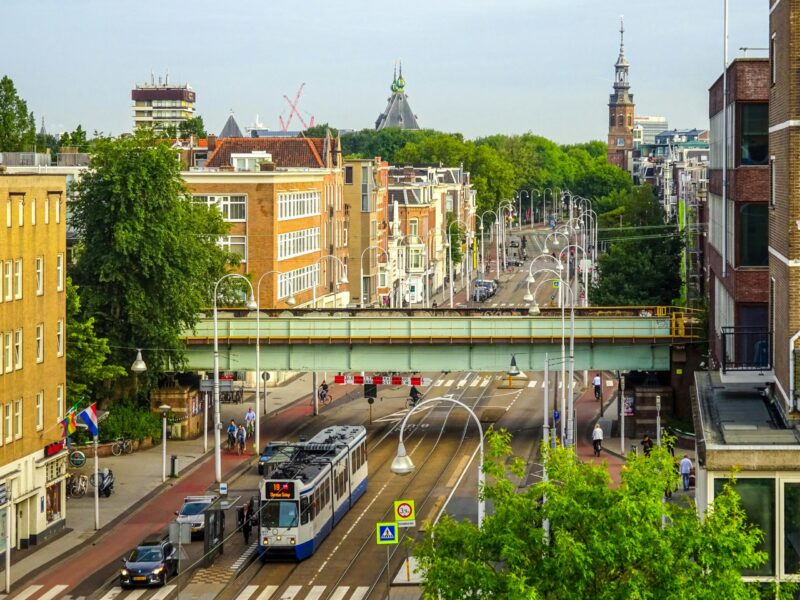
Many houses in the centre of Amsterdam stand on wooden piles and have been settling for a century or more. Frames go slightly out of square and a door fitted straight ends up leaning. Then the strike plate needs to move. This is common in the Jordaan, the canal ring and De Pijp, and not a sign that something is badly wrong.
The lock itself
Sometimes the door is fine and the lock is the problem. A multipoint lock with a worn gearbox lifts the handle but does not throw the bolts. A cylinder with a worn cam turns without moving the bolt. A latch that no longer springs back leaves the door resting against the frame.
If the key turns freely and nothing happens, or the handle feels loose, the mechanism is worn. That is a job for our lock repair service, and often the lock case can be replaced without touching the cylinder.
What you can check yourself
- Close the door slowly and watch where the bolt meets the frame. Scratch marks on the strike plate show which way the door has moved.
- Lift the handle while closing. If that helps, the door has dropped.
- Try the key with the door open. Smooth open but not closed means the door is misaligned; stiff either way means the lock is the problem.
Whatever you find, do not force the key. A snapped key turns a small adjustment into an emergency; if it happens, read what to do about a broken key stuck in the lock.
What we do
Locksmith Amsterdam looks at the whole door: hinges, frame, strike plate and lock. We adjust what can be adjusted, replace only what is worn and tell you which before we start. If the lock case is beyond repair, our lock replacement service fits a new one.
Frequently asked questions
Why won’t my door lock unless I lift the handle?
The door has dropped on its hinges, so the bolt no longer lines up with the strike plate. Adjusting the hinges or moving the strike plate usually fixes it.
Is it the door or the lock?
Test the key with the door open. Smooth open and stiff closed means the door is misaligned; stiff either way means the lock is worn.
Can a door that only sticks in autumn be fixed permanently?
Yes. Planing the swollen edge and sealing the wood stops the seasonal swelling. Forcing the lock only damages the mechanism.
Should I oil the lock?
Use a lock specific lubricant, not oil or grease that attracts dirt. Lubricant does not fix a misaligned door.
Do you repair doors as well as locks in Amsterdam?
We adjust hinges, strike plates and lock cases as part of a lock repair. Structural work on the frame or the door itself is not.
Door won’t lock or close in Amsterdam? Call Locksmith Amsterdam on +31 (0)20 210 1986. We come day or night, find the real cause and confirm the price before we start.