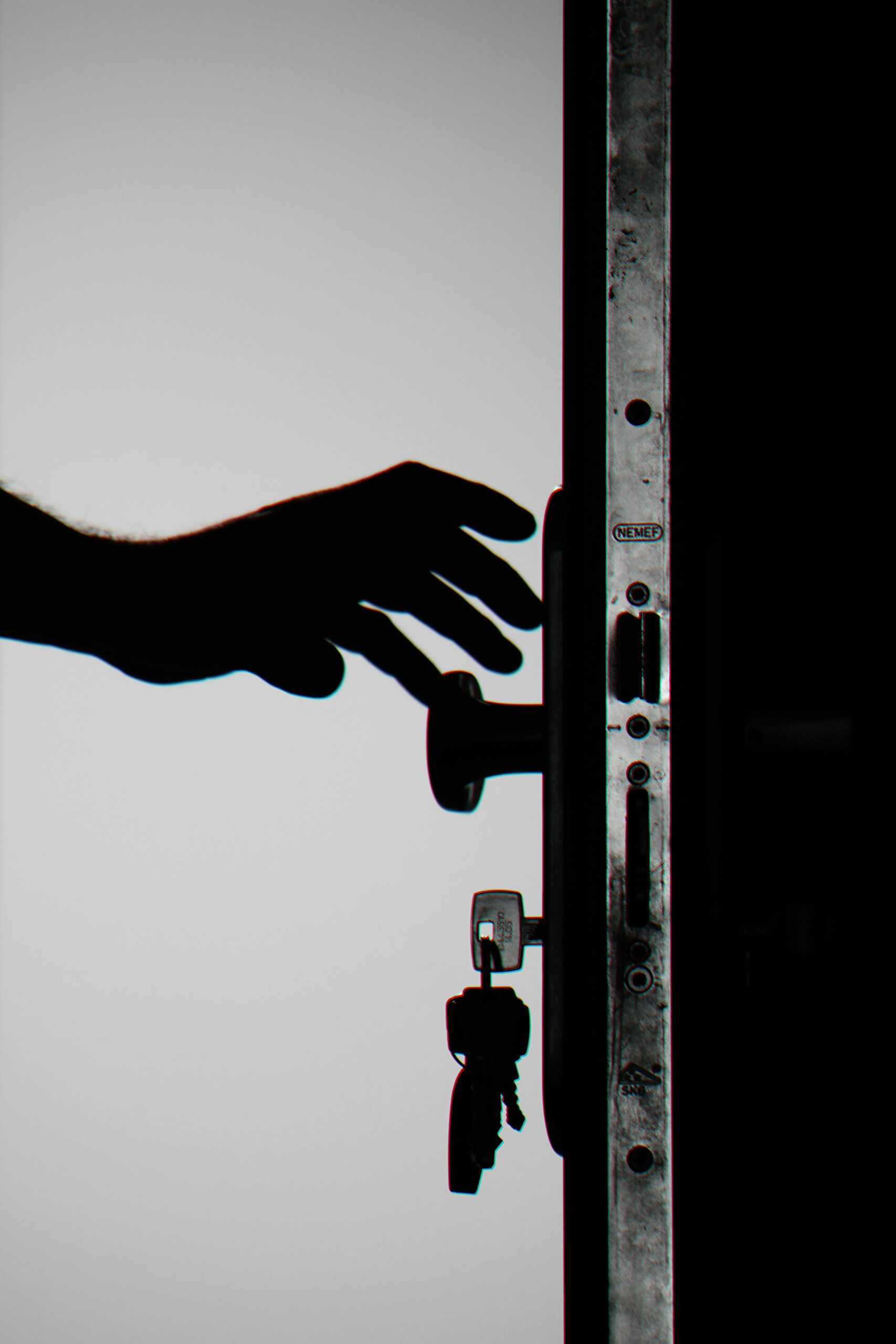
A frozen door lock is a lock in which moisture inside the cylinder or the lock case has turned to ice, so the key will not go in or will not turn; a stiff winter lock is the same mechanism slowed by cold, thickened grease and a door that has swollen in the damp.
A cold morning, the key goes halfway in and stops. Or it goes in, and will not turn. In an Amsterdam winter the problem is rarely a broken lock. It is water in the cylinder that froze, or a wooden door that has swollen so the bolt no longer lines up. The fix is usually simple. The damage comes from what people try first.
What you can safely try
- Warm the key, not the lock: hold it in your hand or against a warm cup for a minute, then insert it slowly.
- Use a lock de-icer spray if you have one. Spray, wait a moment, try the key gently.
- Push the door towards the frame while you turn. On a swollen door the bolt is often stuck against the keep, not frozen.
- Try the other key. A worn copy that works in summer often fails in a stiff winter lock.
What makes it worse
- Forcing the key. A cold key snaps, and a snapped key in a frozen cylinder is a bigger job than a frozen cylinder.
- Hot water over the lock. It gets inside, refreezes within minutes and rusts the mechanism.
- A lighter against the key or the cylinder. It damages the plastic and the finish and rarely reaches the ice.
- Oil or grease into the cylinder. It thickens in the cold and collects dirt; the lock gets stiffer every winter.
Why the door matters as much as the lock
Amsterdam front doors are often wood in a wooden frame, and both move with the weather. A door that closed well in September can be a few millimetres wider in December. The key then turns, but the bolt scrapes or stops. Adjusting the hinges and the keep is a small job for our lock repair service and it prevents the winter lockout next year too.
When to call a locksmith
If the key is stuck or snapped, if the cylinder has stopped turning after a de-icer, or if you are outside with no way in, call our emergency locksmith line. We open the door without damage where possible, free the cylinder, remove a broken key and, if the cylinder is worn, replace it on the spot.
Prevent it next winter
Have the cylinder cleaned and treated with a dry lubricant before the cold starts and check that the door closes without force. A cylinder that sticks in autumn will freeze in winter.
Frequently asked questions
Why will my key not turn in the cold?
Usually ice in the cylinder or a wooden door that has swollen so the bolt no longer lines up. Rarely a broken lock.
Can I pour hot water on a frozen lock?
No. It refreezes inside the cylinder and causes rust. Warm the key or use a lock de-icer instead.
Should I put oil in a stiff lock?
No. Oil thickens in the cold and collects dirt. Use a dry lubricant, or have the cylinder cleaned.
My key snapped in the lock. What now?
Do not try to pull it out with pliers. Call +31 (0)20 210 1986. We remove the broken key and check the cylinder.
Can Locksmith Amsterdam fix a lock that sticks every winter?
Yes. We adjust the door, clean or replace the cylinder and treat it so it keeps turning in the cold.
Key stuck in a frozen lock? Call Locksmith Amsterdam on +31 (0)20 210 1986. We free the lock, remove a broken key and replace the cylinder if needed, with the price confirmed before we start.